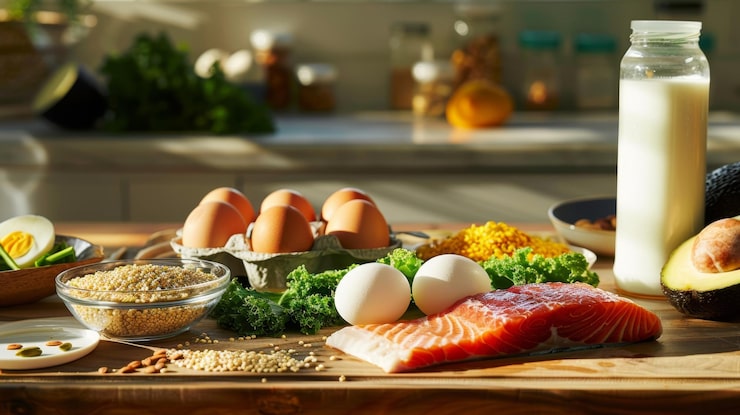
Theoretically, the world has never been more health-conscious, yet human biology is saying something else; the outcomes are worse. The problem isn’t just what people are eating. It’s what their bodies are still being forced to process, neutralize, and recover from. The anti-inflammatory kitchen is a rejection of that mismatch. It’s not about purity. It’s about load. Stop feeding the body things it has to constantly fight just to stay stable.
Conventional animal farming, for example, has drifted far from biological alignment; livestock raised in high-volume feedlots are exposed to inflammatory inputs. As a result, conscious people are moving away from the exhaustion of restricting food and moving toward verifying its purity.
Strict Sourcing Protocols: Purity and Ethical Transparency
You cannot build a clean internal system using unclean external inputs; a foundational principle across several health-related fields. That’s an obvious but most ignored preventative and foundational lifestyle advice.
Also, while most people are keen on botanicals (tested for purity, potency, and contaminants), most tens to ignore the same standards when it comes to scrutiny of animal proteins. That creates an inconsistent system from the start.
Clean eating is about what is verified, not just about what is included.
That means looking at:
- Heavy metal screening across botanical extracts
- Antibiotic and hormone transparency in animal proteins
- Consistent batch testing for both categories
- Supply chain traceability from source to plate
In this framework, meals built around nutrient-dense proteins like Elk Steaks inherently shifts this equation because it has no industrial exposure layer, unlike feedlot livestock systems. Hence, wild game meat becomes part of structured food inputs for reducing biological noise, offering clean protein and iron without the inflammatory baggage associated with industrial livestock systems.
Shifting the Fatty Acid Burden: From Industrial Meat to Wild Game
Most conventional meats come from systems designed for volume, not biological alignment. That often means higher omega-6 fatty acid exposure, which can tip the body’s internal balance when not counterweighted properly. Over time, this imbalance is associated with persistent, low-level inflammatory signaling.
Wild game offers a different profile entirely. Leaner cuts with a more favorable omega-3 to omega-6 ratio reduce that inflammatory load, not by being “perfect,” but by being closer to what the body naturally recognizes as clean fuel.
This isn’t about demonizing food groups, it’s about recognizing load. What does the body have to process, neutralize, and recover from after every meal? Replacing heavily industrialized meats with wild-sourced proteins shifts that burden downward. Less metabolic friction. Less inflammatory residue. More stable energy output. In practical terms, the body stops spending as much time in repair mode and starts functioning more efficiently in real time.
Cellular Recovery Pathways
Recovery isn’t one system, it’s a network. Tissue repair, immune modulation, and nervous system regulation all overlap, especially after physical exertion or chronic stress. Zinc plays a central role here. It’s not just a trace mineral; it’s a regulatory signal for immune and cellular repair pathways. When bioavailable sources are present, the body can move more efficiently through post-stress recovery cycles.
There’s also growing interest in how plant-derived cannabinoids interact with stress signaling pathways. While research is still evolving, they are often discussed in relation to modulation of inflammation and nervous system recovery responses.
What matters most is synergy, not isolated inputs, but how systems overlap. Nutrient-dense proteins provide structural repair material, while targeted botanicals may help regulate the internal stress environment that slows recovery down. When both are aligned, the result is less “bounce back” effort and steadier recalibration.
In essence, an anti-inflammatory kitchen is not defined by restriction, but by precision. It’s about removing unnecessary stress from the body’s input systems so recovery can actually keep pace with demand. When food, botanicals, and sourcing standards all operate under the same principle of transparency and biological respect, the body stops overcompensating, and starts stabilizing. Sourcing game meat is offering a critical shift for those prioritizing sustainable and clean meat cuts.

